
My brilliant nemesis
Elena Ferrante and the reach of novelists in the 21st century.

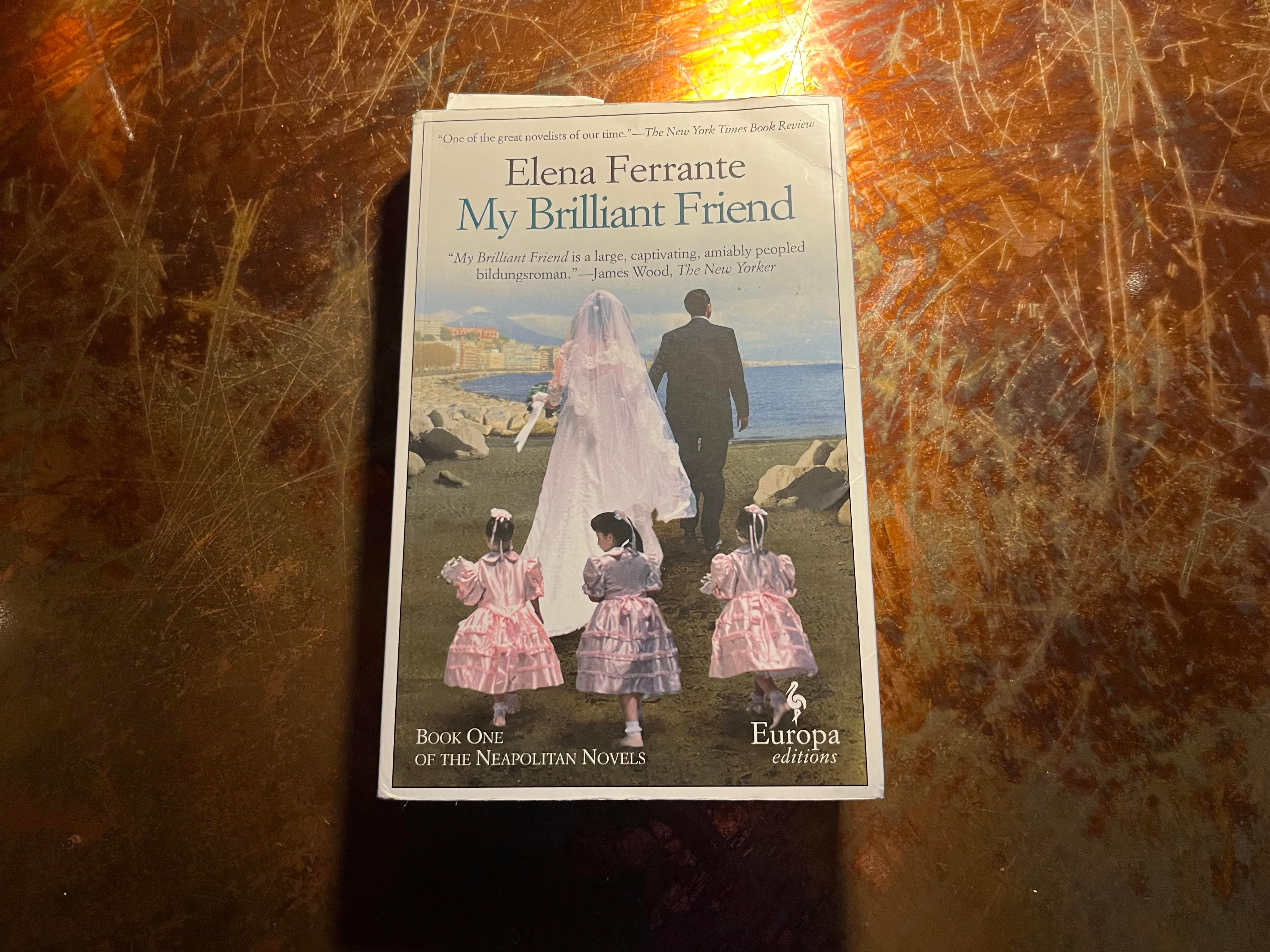
Elena Ferrante’s “My Brilliant Friend” is so good it made me angry. I kept dog-earing pages through the novel’s final scenes, about a Faustian marriage in working-class Naples. A moment between two friends at the bride’s pre-ceremony bath almost yanked the spirit out of my body. The plot turns felt at once unpredictable and inevitable, the sentences grown heavy as if written in pig iron. After the reveal in the final paragraph, I said fuck into an empty living room, slapped the abused paperback to my forehead, and held it there.
A best friend remakes us because a best friend is our nemesis: not in that word’s modern, negative connotation of “rival” (although friendships can be rivalrous) but in the spirit of the Greek deity Nemesis, the justice god, whose acts lift and lower people to their proper level. While “My Brilliant Friend” is a coming-of-age novel that’s about everything — class, gender, politics, money, family, fate, there’s something for everybody — the book’s real moving force is the impetuous Lina.
Lina polishes her friend, the narrator Lenù, into a brilliant reader and perceiver, because that’s what Lina is:
…she took the facts and in a natural way charged them with tension; she intensified reality as she reduced it to words, she injected it with energy. But I also realized, with pleasure, that, as soon as she began to do this, I felt able to do the same, and I tried and it came easily.
This nemesis friendship is what ignites within Lenù the powers of a novelist, the seer who perceives in her suffocating slum an epic stage. Lina, increasingly mired in her circumstances, watches this transformation and is humbled. The brilliant friend, she says, is Lenù.
“My Brilliant Friend” made me angry because other media doesn’t make me feel this way — fully like a human. Getting back here (after many years away from fiction), being ready for this kind of experience, required quitting TikTok and former Twitter to restore the mental discipline necessary for novels. It takes a patience that verges sometimes on boredom. And boredom scares some people to death, including me. The current conversation about the cultural decline of literary fiction, as such, is irrelevant to me as a reader. Great works are out there whenever I’m ready for them.
The novel is still the dominant art form for capturing interior lives, surpassable in perception only by data-powered surveillance. But data is artless, the medium of the tech oligarch, who sees all and knows everything except the most important things in life. The novelist, like in the 19th and 20th centuries, remains our middle-class champion of the private existence, its rivalries, romances and secret histories.
This book has been on my list for some time! I'm going to move it toward the top of my list given what you wrote about it.
I also recently came to the realization that I have been reading a string of non-fiction books — a mix of business books and memoirs — but I felt like I was missing something. This weekend, I decided to refocus on fiction, but I wanted it to be a book that I had already read to help ease my transition back into the world of fiction. I figured something familiar, with a plot that I had slightly forgotten would be good. I'm now (re)reading "An American Marriage" and diving back into the world that author Tayari Jones created. It has been exhilarating.
After reading the first book I had to read all the rest of the series. Excellent work. I also watched the limited series after reading sections of the books and that really helped me to visualize all the dynamic interpersonal relationships.