
New York diary
The bitter cold; Vaclav Havel's anti-authoritarianism; William James' pragmatism.

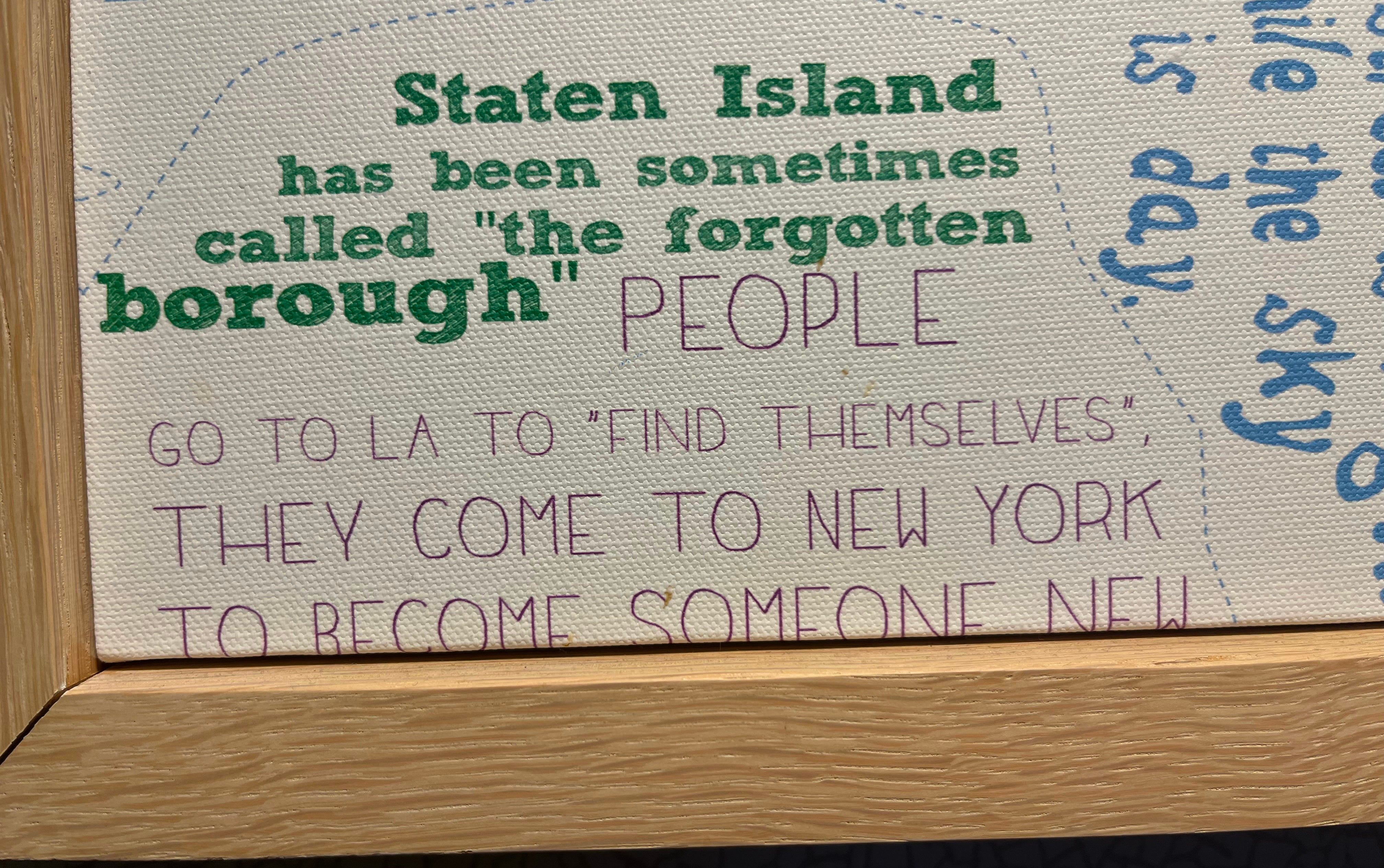
I was in New York City this week, suffering as an unprepared Californian must. Weeks-old snowbanks had hardened into evil scum-crusted ice heaps. Amid single-digit temperatures, surrounded by ominously unmelting pissbergs, I discovered the zipper on my ancient heavy jacket from Missouri was broken. It had probably broken a long time ago. The East Coast really loves reminding you how much a day can involve putting on and taking off outerwear.
There were lots of nice things too: old friends, lively dinners, beautiful views, long Central Park coffee walks amid the unstoppable joggers, and John Cameron Mitchell’s turn in “Oh, Mary!” Still, summoning antagonisms from a pile of modest inconveniences to project them in a new direction — as travel is wont to provoke in writers — I once again fell into loose observations about The State of It All These Days.
Walking past the gaudy international luxury storefronts around Trump Tower on Fifth Avenue made me understand the context and origins of the president’s gold-plated aesthetic a little better. I felt spiritually suffocated one afternoon when emerging from a subway stop amid another copy-pasted business strip of Cavas, Pret a Mangers and Shake Shacks. Too many chain businesses everywhere robs us of life’s pedestrian pleasures, which include looking at the funny names of small businesses and all the weird stuff inside the windows. Are Prets a nuisance, or are they infrastructure? I wondered. But I quickly faced facts: Prets are definitely infrastructure, unless you’re the first human in Manhattan to never need the restroom.
I’m not in New York often, but what struck me this time around in the media and literary capitol of America was how many fewer New Yorkers were hauling around books and newspapers than times I had visited as a younger writer. Los Angeles had long gotten a bad rap as the city that doesn’t read, but it brings no pleasure to watch New York appearing to close the snob gap from the wrong direction. Many people, of course, still read and read deeply, via device, sometimes even more than via print. But for your voyeuristic visitor, the total anonymity and ubiquity of the iPhone — kind of like a CitiBank Cafe branch for the hand — evokes less mystery about the vast and unreal interior lives of strangers than the young man on the train staring into a copy of Mary McCarthy’s “The Stones of Florence.”
Oh well. I guess I was anonymously on my anonymous laptop in an anonymous Blank Street chain coffee shop when I revisited Vaclav Havel’s “The Power of the Powerless” (1978), with its timeless evocation of the brittle comprehensiveness of dictatorship:
Because the regime is captive to its own lies, it must falsify everything. It falsifies the past. It falsifies the present, and it falsifies the future. It falsifies statistics. It pretends not to possess an omnipotent and unprincipled police apparatus. It pretends to respect human rights. It pretends to persecute no one. It pretends to fear nothing. It pretends to pretend nothing.
Individuals need not believe all these mystifications, but they must behave as though they did, or they must at least tolerate them in silence, or get along well with those who work with them. For this reason, however, they must live within a lie. They need not accept the lie. It is enough for them to have accepted their life with it and in it. For by this very fact, individuals confirm the system, fulfill the system, make the system, are the system.
To lull myself to sleep at night at the hotel, I’d start with a pocket edition of Tolkien’s “The Hobbit” with the bedstand light on, then turn off the lights and close with William James’ oddly soothing (to me, anyway) 1906-1907 lectures at Columbia University on pragmatist philosophy, on my anonymous iPad in dark mode, with the text brightness turned all the way down. James liked to think of pragmatism as an empirical method rather than its own answer to life’s biggest problems. Philosophy, to James, was meaningless if all this reasoning didn’t offer some practical implication for human behavior, some change in how we ought to act, some change in what we ought to do. Metaphysical abstraction was too often cover for a kind of literary woo-woo:
You know how men have always hankered after unlawful magic, and you know what a great part, in magic, WORDS have always played. If you have his name, or the formula of incantation that binds him, you can control the spirit, genie, afrite [ifrit], or whatever the power may be. Solomon knew the names of all the spirits, and having their names, he held them subject to his will. So the universe has always appeared to the natural mind as a kind of enigma, of which the key must be sought in the shape of some illuminating or power-bringing word or name. That word names the universe’s PRINCIPLE, and to possess it is, after a fashion, to possess the universe itself. ‘God,’ ‘Matter,’ ‘Reason,’ ‘the Absolute,’ ‘Energy,’ are so many solving names. You can rest when you have them. You are at the end of your metaphysical quest.
But if you follow the pragmatic method, you cannot look on any such word as closing your quest. You must bring out of each word its practical cash-value, set it at work within the stream of your experience. It appears less as a solution, then, than as a program for more work, and more particularly as an indication of the ways in which existing realities may be CHANGED.
It’s fitting that the most famous American philosophical tendency is known for being against abstractions and for practicalities, perfect for a land of self-optimizing wealth managers with Oura rings who don’t mind another utilitarian slop bowl place opening down the block, uncertain about the meaning of fuzzy and partisan-sounding words like “liberalism” or “freedom” or “democracy,” but perfectly understanding of the practical cash-value of money and all the things you can do when you have it.
Gorgeous, evocative writing, Matt, as I’ve come to expect. And yes, thank you for the quote from the Powerless.
Thank you for the great quote from the Power of the Powerless. Strikes me as a perfect fit for the times—I know supporters of the regime who know deep down it’s all lies but it’s easier for them to live with the lies than look at themselves and admit they were conned. I also happen to be in NY this week—Brooklyn—and while I inspired by the incredible range of different types of people, it saddens me how trash fills the sidewalks and beggars are commonplace. Guess I’m too soft-hearted for the big apple.